Fat Head Documentary - Debunking the Low-Fat Diet


We saw Spurlock’s “Super Size Me” taking on the fast food industry by having the him gorge himself on McDonald’s at least 3 times per day, claiming that if he kept going at his pace, the high fat content would surely kill him. For years, the public has been made to believe that eating fat makes us fat and causes health problems. Now a new documentary, “Fat Head“, by Tom Naughton, is coming out to attempt to use Spurlock’s documentary techniques against him and the rest of the anti-fat community.
Here’s a trailer:


Food, food, food


Food - breatharians may claim it isn’t needed, but for the overwhelming majority of us, there’s no denying that food is a critical part of life. Unfortunately, what we should eat to be healthy is a seemingly constant debate resulting in ever changing diet books and programs.

Trying to dissect the volumes of volumes of information is incredibly difficult for the average person. What makes it even more difficult for us is that none of the information is consistent and it seems that even the experts get everything wrong. If they can’t figure out what we should eat, then what’s a guy looking for a healthy diet supposed to do?

The answer is research, and lots of it. Over the last little while I’ve been reading all that I can on nutrition, attempting to not get stuck in the fads and one solution fits all kind of mentality. It’s difficult trying to make heads or tails of nutrition, but I’ve come across some great stuff that I thought I’d share.

While there are more and more “fad” diets coming out with books and all sorts of highly marketed material aimed primarily at sucking dieters dry of their hard earned cash, many of the more recent diet programs are incredibly closely related and for the most part, they follow similar principles. Atkins, Zone, Paleo, Glucose Revolution, South Beach and countless more diets all basically revolve around the idea of low carbs. While some of them such as Zone and South Beach mask the low carb idea around insulin or glycemic indecies, ultimately they paint refined, high density carbs as evil and prescribe significant amounts of protein and fat as a crucial part of the diet. Read on…


You Are What You Eat - New Facebook Group


New Facebook group, “You Are What You Eat“. Join in on the discussion!

popeye-yam-spin.gif


Back on the Zone


After the Christmas holidays, after all the beer and chocolate and rolls and more chocolate and more beer, I’m going to start 2008 off on the right foot and once again, enter the Zone.  Time to get out the zone block charts and work on my eyeballing skills.

While searching around the net for some Zone recipes to prepare the shopping list for this week, I came across a PBS broadcast from 2004 called “Losing It”.  The program chronicles the weight loss attempts of a group of individuals attempting to lose a few inches.  From stomach bypass surgery to Weight Watchers, each of them goes at the challenge in a different way.  The program also talks about low calorie diets and how carbs should be moderated and they hit home the point about how fats shouldn’t necessarily be considered evil and how they, in fact, are an important dietary element.  Classic elements of diets like the Zone.  The results of the “study” are also interesting (although hopefully not surprising) as the most successful of the dieters was on the Zone.

Fortunately PBS isn’t too caught up in making money and they offer some of their programs for watching online.  Losing It can be found here for your viewing pleasure.


Outback’s Aussie - the Worst Food in America


I just had to scan this in and post it. Again - from this month’s issue of Men’s Health. Reminds me of Taco Bell’s Cheesy Fries and my daily intake of calories during University (mmmm chili cheese fries). Looks awesome. Tastes great. But nearly 3000 calories? Geesh!

img019_thumb.jpg


Stay Young and Fit as You Grow Old by Keeping those Calories Low


smallportion.jpgThere is a large body of evidence that having a severely caloric restricted diet can result in a longer life span while maintaining a youthful appearance.

Now new research from the University of Buffalo has found that this sort of diet can also help maintain physical fitness into advanced age, slowing the progression of physical disability.

The study found that rats who were fed a severely low caloric diet were able to keep lean muscle mass while those rats who were fed a normal diet actually lost lean muscle mass and gained more fat. The low calorie rats also had higher physical performance scores.

Unfortunately translating the diet from rats to humans would be very difficult. The rats in the study were living on a 40 precent reduced calorie diet. This would be practically impossible for a human. However, according to Tongjian You, the principal investigator on the study, an 8-percent reduced calorie diet could be both doable and beneficial for humans.

For more information, see the official news release, here.


The Obesity Pandemic


Obesity may have been a status symbol at one point in our tiny history.  Having an abundance of midsection was correlated to having wealth and the riches to afford lavishness in the 17th century.  If that were still the case, you’d expect every other person to be in the money these days.  Or at least 40 percent of men and 30 percent of women.

A new global study revealed that 4 in 10 men and 3 in 10 women are overweight, while 24 percent of men and 27 percent of women are obese, researchers reported in Circulation: Journal of the American Heart Association.

The study consisted of looking at over 160,000 people ranging in age from 18 to 80 over 63 countries across five continents.  The results of the study provide a sneak peak at body fat worldwide.  And by sneak peak, I mean showing something that is becoming common knowledge - that obesity is pandemic.  With “one half to two thirds” of the study population being overweight or obese, that is practically an understatement.

Rather than look at BMI (body mass index - a height to weight ratio), the study looked at waist circumference.  According to the lead author of the study, waist circumference is not only easier to measure in a clinical setting, it is also a better indicator of heart disease and diabetes risk.

In the study, 168,159 people (69,409 men, 98,750 women) from 18 to 80 years old (average age 48) in 63 countries across five continents were evaluated by their primary care physicians.

“For men, each increase of approximately 5.5 inches (14 centimeters) means an increased frequency of about 35 percent for heart disease and for women an increase of approximately six inches (15 centimeters) equates to a 40 percent increase for heart disease. Even in people who are lean, an increasing waist circumference means increasing risk for heart disease and diabetes.”

So what has happened to make our World  so obese?  If it is such a health issue and not uncommon sense, then why is it becoming more and more of a problem?  It’s great that we know all the facts but what about a solution?


Reduce Food Cravings by Chewing Gum


gumchewing.jpgSometimes you feel hungry when you don’t really need to eat. Typically in these moments are in between meals and usually less healthy choices are made - we reach for the bag of chips or chocolate bars - yes, the joys of snack time.
But what if there was a simple way to control those cravings. A recent study from Glasgow Caledonian University in Scotland found that chewing gum before snacking could help reduce hunger and promote a sense of fullness. The study showed that the average caloric intake from snacking was reduced by 25 calories among dieters and over 35 calories among non-dieters. Although seemingly insignificant, over the long term these calories add up. The study participants also reported that gum chewing helped improve mood and contentment.

So grab a stick of juicy fruit (sugar free) the taste is gonna move you (less towards the fridge door). I know… terrible joke attempt.


Staying Fit While On Business Trips


I recently had to make a 3 day trip down to Sunnyvale California for work. It was a pretty good trip, as far as business goes (although the weather was oddly cooler than here at home in Canada).

Heading out of town for any length of time breaks up the normal routine. Sleeping, eating and exercising are all completely disturbed by meetings, work and jet lag. But with some effort, the potential damage to these three essential pieces of the fitness pie can minimized.

As I’ve mentioned in many previous posts, sleep is very important, not only for staying healthy and keeping your brain active, but for building muscle and weight loss.

Flying outside of your timezone will modify your sleep cycles enough to totally cause a run down. I find that flying East and gaining time is the most difficult. Regardless, catching some Z’s on the plane will help. Especially if you’re flying an all nighter. But there’s nothing worse than trying to sleep on the plane.

Bring on the plane:

  • a neck support
  • some ear plugs
  • a blind fold

as soon as the first meal and movie is finished, plug your ears, support your neck, blind yourself and wrap up in a blanket. This will help get some necessary shut eye.

When you get to your hotel and your first night arrives, try to push yourself through to your normal sleep time. Otherwise, you might find yourself going to bed super early and waking up at 4am.

When it comes to eating while away, restaurants and fast food are unfortunately on the meal plan. But even when faced with double cheeseburgers and heaping piles of mashed potatoes, there are always ways of maintaining a healthy diet.

Always try to keep the Zone mentality in mind when getting a meal. Make sure to balance the protein to carb ratio, 30:40.

If you’re getting breakfast in the hotel restaurant, bacon, eggs and some fresh fruit would be ideal. Hold off on the potatoes and toast. Lunch or dinner requires something quick? Go ahead and burger it up, but skip the fries and toss the top of the bun. If a salad is offered as a side, always go that route instead of something fried.

Dinner portions at restaurants are generally huge (especially when paid for by the company) so know your limit. Just because there’s food on the plate doesn’t mean you need to eat it all. Try to skip out on the alcohol. It may be difficult, but at least stay away from the beer. Beer may taste great but we all know what it means to the bellies.

Working out, on the other hand, may be easier to accomplish during a business trip than while at home. The distractions of family life are not present and most hotels have at least some form of exercise room available.

Check when you arrive to see what time the hotel gym opens at. If you’re flying from New York to Santa Clara, you will probably be up before the sun rises so take advantage of the early morning and charge yourself up with a workout.

Most likely, however, the hotel’s exercise room will contain mostly treadmills and possibly one or two universal machines. You’ll be lucky if there are dumbbells or any other equipment. Make the most of what is available and improvise. Remember that no matter what kind of lack of equipment you’re faced with, you will always have pushups, situps, leg raises, squats and dips.

While away on business, you will be faced with all sorts of obstacles to your normal routine. The key is to try and keep up with your daily activity and manage to eat healthy.

Don’t give up and pretend that you will just continue with your routine when you get back. More likely than not it won’t happen. Once you get distracted from your workout schedule and eating plan, it is really difficult to get back on top of it.


Why Weight Training is Important for Weight Loss


When most people think of a weight loss program, they first probably think of dieting. Second to that is usually some for of cardio - walking, running, elliptical, whatever. These two components are definitely important parts of losing weight. However, what many people don’t realize is that resistance training is also very important.

Resistance training is pretty much synonymous with strength training. It’s working your muscles against some sort of resistance. This includes body weight exercises like pushups, situps and air squats as well as other forms of resistance training including weight training.

Yikes - did you just say weight training? But I don’t want to get huge like Arnold. I just want to lose the bulge.

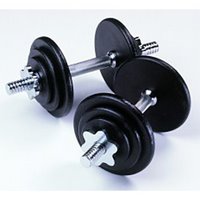
A common misconception is that weight training should be relegated for those individuals looking to gain muscle mass - who want the big guns. While it’s true that weight training is a necessity for bodybuilders, it’s pretty much a myth that lifting dumbbells and barbells translates into getting huge. In order for this to occur, bodybuilders need to eat a large number of calories on a daily basis. It’s just a difficult thing to do - especially for women. Substantial muscle growth requires hormones (like testosterone) that just isn’t as readily available in women. Even many men have much difficulty getting the big guns. For dieters, who are probably on some sort of strict diet (hopefully a Zone diet), getting huge should not be a worry at all. It aint gonna happen - not even close.

But muscle mass is a good thing for the dieter and it’s very important to include resistance training in any sort of weight loss program. Here are some reasons why.

  • More muscle equals a higher metabolic rate. Research has shown that regular resistance training may boost your metabolic rate up to 15%. A higher metabolism means more fuel gets burned faster making it easier to maintain a healthy weight.
  • Resistance training can boost bone mineral density, decreasing the risk of osteoporosis and fractures.
  • It can strengthen weak body parts and joints, reducing the risk of injury in day to day activities and sports.
  • Resistance training creates muscle and changes the body composition which improves an individual’s appearance.
  • Muscle takes up less space than fat. Building muscle changes the ratio of fat to muscle on the body, helping to create tone.

So if you’re currently on a diet and have been thinking about getting to the gym and incorporating some weights, find a good weight training program and add it to your weekly routine. If you have always thought of weight lifting as a guy’s thing or something that’s strictly for bodybuilders, think again. Weight lifting and resistance training is great for all of us, regardless of our goals.


Diet Television


So you’ve committed to losing some weight and have set a goal in mind. Step one complete. Now what? How do I achieve this goal? Fortunately for you, there are literally thousands of resources on the web that can help, including thefitblog.net, of course. Shameless plug aside, it’s true. If there were one resource that can actually get you to your goal weight, it’s the web. A few articles ago, I reviewed a bunch of social networking fitness sites. What I discovered today was a similar kind of site, but less geared towards social networking and more geared to helping you get on the train to successville.

Diet Television could possibly be the diet site to end all diet sites. You sign on and they more or less just tell you what to do. They get your body stats and interests (whether your looking to be lifting weights or going for runs) and from that, determine when you should expect to reach your goal and what can be done to help get you there. They devise a workout plan and include instructions for each of the exercises. They also provide lots of nutrition and diet information. The best part of all of this, of course, is that it’s completely free.

The motto for Diet Television is “Learn it, lose it, link up”, aptly describing its inclination towards goal setting and assistance. Like the social networking sites, you can create a profile and “link up” with others, which can be a source of some inspiration as you watch other individuals get closer to their goals. The site is in Beta and is still under construction, but with its simple, intuitive interface and the obvious large amount of thought put behind it, it definitely looks promising and is worth at least checking out.


The Importance of Protein for Weight Loss


Although recent diet “fads” have been proponents of low carbs and high proteins, the concept is certainly not something new. In fact, it’s been a common practice in bodybuilding for decades. Dave Draper, for example, went on tuna-and-water diets back in the Venice, California Muscle Beach Golden Era heyday in order to get cut and lean up.

But the “fad diets” do have a point - just as protein is important for bodybuilders to gain hard muscle, eating good amounts of protein is important for losing weight - or more specifically, breaking down the body’s fat storage. When high amounts of glucose or simple carbohydrates are ingested, insulin is produced to break down the sugars and ultimately, store any unused energy as fat. This is why eating a tub of your favourite H


In a Rush and Want a Good Breakfast? How About Eggs and Toast?


I’m an oatmeal guy on most days. But I’m also a guy and, like most people in this modern day and age, somewhat time constrained - especially during the week, in the morning. In order to get my oatmeal in, I turn to the trusty microwave. I put about half a cup of oatmeal in a bowl, cover the oatmeal with water and nuke it for exactly 1 minute and 35 seconds. Add a bit of honey and milk, and I’m good to go.

However, oatmeal does get tiresome and some days I want a little change. Some days, I want an egg for breakfast. But I just don’t have time to get out the frying pan or boil some water and I’m not one to eat a raw egg. So once again, I turn to the trusty microwave. Crack the egg in a microwave bowl and whisk it up with a teeny bit of milk. Nuke it for a minute and you’re set. I’ll usually also put the egg on a piece of multigrain or whole-wheat toast and top it off with a couple tablespoons of salsa.


Diet Pop is Bad for You?


Today, the CBC reported that a “huge” U.S. study has found that “Diet soft drinks [are] linked to health risks”. The study “included nearly 9,000 observations of middle-aged men and women over four years at three different times. [It] looked at how many 355-millilitre cans of cola or other soft drinks a participant consumed each day.” The researchers found that regardless of whether the study’s participants drank diet or non-diet sodas, there was a 45% increased risk of new-onset metabolic syndrome. Metabolic syndrome describes an umbrella of symptoms such as central obesity (apple shaped body), high blood pressure, high cholesterol and onset diabetes.

It’s clear how, with an average can of coke containing almost 8 teaspoons of sugar, regular soda can increase the likelihood of metabolic syndrome. However, what is unclear, and what the study fails to identify, is how sugar-free soft drinks can be linked to the problem.

I believe that, in general, diet or not, soda is mostly consumed by individuals with higher daily caloric intakes - not necessarily from the soda itself, but in other dietary elements. Therefore, while it may be possible to enjoy diet soft drinks and not have any symptoms of metabolic syndrome, looking to identify how soda contributes to the problem by simply looking at individuals diet\non-diet soda preferences is not going to shed an ounce of light on the role of pop in health problems. Instead, the whole diet will have to be looked at in future studies, limiting the uncontrollable dietary variables.