Social Networking – Fitness Style


In the last couple of years, social networking sites have risen in Internet popularity faster than any other website type. First came MySpace and more recently, Facebook, which keeps getting a larger and larger community. Literally hundreds of other social networking sites exist. Wikipedia has a good sample of what’s out there. These sites allow users to post items about themselves, keep running commentaries (blogs), hook up with other people, hook up with their people, post pictures, videos and a whole whack of other things.

What’s neat about social networking is that it has the potential to put people in touch with other similar, like minded individuals. It creates a community and sometimes sub-communities and groups, allowing people to share and learn from others. Taking Facebook to a more focused audience, a growing number of social networking sites are targeting specific interests and activities. And fortunately, fitness and social networking seem to go hand in hand.

Below is a list of a bunch of social networking style fitness sites. Some of them are smaller sites that have just started up, while others have been around for a while and have been doing the social networking thing whether they knew it or not. By combining things like nutrition and exercise tracking, personal blogs, goal setting and tracking, groups, photo and video sharing and forum style posting, these sites could be truly useful tools for individuals interested in diet, fitness and health, or who are interested in losing some weight or changing their physique. By taking advantage of what social networking has to offer, the fitness-minded now have some new tools to help track their progress, meet new people and, probably most importantly, help stay motivated.

BodySpace A community driven site by Bodybuilding.com. This site has a lot of members, boasting over 87,000 user profiles as of this writing. Good progress tracking. Blogging, photo and video sharing and forums also offered. Has a humungous library of articles on bodybuilding.com
Sparkpeople Another site that has been around for a while. Features personalized pages and blogs, meal plans and recipes. Tools for calculating calories and tracking exercise and weight. A wealth of nutrition and exercise information and articles.
traineo A new site on the block. Offers similar features to the rest – personalized page, goal and diet tracking, community. Also features a unique concept of having “motivators” to help keep you on track.
My Fit Tribe My Fit Tribe calls itslef “an island of fun, fitness and friends”. Although the whole tropical island theme is a little strange, the site has a nice layout and some good articles. Blogs, video workouts, exercises, groups, forums, photo sharing.
Wellsphere Another newer site. Personalization, groups, trainer support, goal tracking, health club listings, event searching.
Fitlink Beyond the usual fare of social networking features, fitlink also has integration with google maps for mapping (and sharing) running routes. Also has a fairly usable “workout generator”. Personalization, goal tracking, groups, photos. Small, but growing community.
gimme20 Fitness and progress tracking, workout builder, personalization, blogs, forums and groups. Small, but growing community.
Shapefit Fittracker From the fairly extensive fitness website Shapefit comes FitTracker. With a large existing readership, this fledgling offspring community site is rapidly growing. Has all the usuals – personalization, groups, photos, goal tracking, workout generator, etc. Like BodySpace, has a very large number of articles on its parent site.


In a Rush and Want a Good Breakfast? How About Eggs and Toast?


I’m an oatmeal guy on most days. But I’m also a guy and, like most people in this modern day and age, somewhat time constrained – especially during the week, in the morning. In order to get my oatmeal in, I turn to the trusty microwave. I put about half a cup of oatmeal in a bowl, cover the oatmeal with water and nuke it for exactly 1 minute and 35 seconds. Add a bit of honey and milk, and I’m good to go.

However, oatmeal does get tiresome and some days I want a little change. Some days, I want an egg for breakfast. But I just don’t have time to get out the frying pan or boil some water and I’m not one to eat a raw egg. So once again, I turn to the trusty microwave. Crack the egg in a microwave bowl and whisk it up with a teeny bit of milk. Nuke it for a minute and you’re set. I’ll usually also put the egg on a piece of multigrain or whole-wheat toast and top it off with a couple tablespoons of salsa.


Diet Pop is Bad for You?


Today, the CBC reported that a “huge” U.S. study has found that “Diet soft drinks [are] linked to health risks”. The study “included nearly 9,000 observations of middle-aged men and women over four years at three different times. [It] looked at how many 355-millilitre cans of cola or other soft drinks a participant consumed each day.” The researchers found that regardless of whether the study’s participants drank diet or non-diet sodas, there was a 45% increased risk of new-onset metabolic syndrome. Metabolic syndrome describes an umbrella of symptoms such as central obesity (apple shaped body), high blood pressure, high cholesterol and onset diabetes.

It’s clear how, with an average can of coke containing almost 8 teaspoons of sugar, regular soda can increase the likelihood of metabolic syndrome. However, what is unclear, and what the study fails to identify, is how sugar-free soft drinks can be linked to the problem.

I believe that, in general, diet or not, soda is mostly consumed by individuals with higher daily caloric intakes – not necessarily from the soda itself, but in other dietary elements. Therefore, while it may be possible to enjoy diet soft drinks and not have any symptoms of metabolic syndrome, looking to identify how soda contributes to the problem by simply looking at individuals diet\non-diet soda preferences is not going to shed an ounce of light on the role of pop in health problems. Instead, the whole diet will have to be looked at in future studies, limiting the uncontrollable dietary variables.


Killer Exercise – Pull-ups


The pull-up is one of the most basic exercises – it’s simple. Just pull yourself up. However, its simplicity can be incredibly deceiving. I can’t recall the number of times I’ve seen a guy lifting really heavy weights and then struggling to get a few pull-ups. However, for building arms and back muscles and strength, the pull-up is a fantastic addition to your exercise repertoire.

For a simple exercise, there are a few very different variations. The most common version is the simple dead-hang pull-up. Start hanging from the pull-up bar (ie. dead) and pull yourself up, pulling your chin up to slightly over the pull-up bar. Your grip can be either palm down or palm up. When performing pull-ups with the palm up, it is often referred to as a chin-up (or chin). It puts some additional focus on the biceps, but for the most part, either grip is suitable for a standard pull-up.

The width between your grip plays an important factor in difficulty. The wider your grip, the more difficult the pull-up will be and a greater distribution of work will be put on the back and triceps muscles.

The kipping pull-up (video courtesy of crossfit) starts the same way as its dead-hang counterpart, but instead of simply pulling yourself up from a dead hang, you use your full body to produce a force to help you up. This enables a greater number of pull-ups to be performed. Typically, gymnasts use kipping styles when on the rings. Kipping pull-ups are very difficult to perform properly, but once you get the hang of them, a set of 10 kipping pull-ups become simple. Kipping pull-ups could be added as part of a high intensity circuit style workout (5 sets of 10 kipping pull-ups, 10 push-ups and 20 air squats, done back to back).

After mastering the dead-hang pull-up, weighted pull-ups might be a consideration. Dangle a dumbbell from your feet or use some ties to tie a plate around your waist. This is an extremely advanced version of the pull-up that could cause injury if done incorrectly.

Leg raised (or L-Sit) pull-ups are dead-hang pull-ups done with the legs out in a hanging leg raise style, thus not only targeting the arms and back muscles but adding the abdominal muscles into the mix. Start with a standard dead-hang pull-up and raise the legs straight out in front of you. Now perform the pull-ups. You will find that on the way down, the force of stopping as the arms become fully extended puts an incredible amount of work on the abdominals. Definitely a great addition to a full-body workout.

If you can’t or have difficult performing any sort of pull-up, fortunately there is assistance to help you work yourself up to the standard pull-up. Jumping pull-ups start each pull-up with a jump. Start with arms extended to the pull-up bar and feet on the ground. If you cannot reach the ground, use a box or steps to allow your feet to touch the ground. Begin with a small jump to help yourself up to the chin-over-bar position. Work on the negative. In other words, lower yourself slowly from the chin-over-bar position. This will work the muscles well and help prepare you for a full non-assisted pull-up. Another assisted version requires the use of some additional gym equipment. Fortunately most gyms have these machines. They are called gravitrons. They usually have parallel bars at mid-level for assisted dips and pull-up bars at the top. Additionally, they have a pad on a set of rails and a stack of plates on a pully system, attached to the pad. The pad is for kneeling on. The stack of weights works counter to most other gym machines. As you use less weight on the gravitron, you are essentially using more of your body weight. Try setting the gravitron to 40lbs to start. Think of it as reducing your own body weight by 40lbs, making you lighter to pull up.


Top Sources for Yer Omega-3


There has been no end to the number of articles being published over the last little while regarding the benefits of Omega-3 fatty acids. From the heart to the brain, Omega-3 seems as essential to the protection and maintenance of our important organs as other important vitamins and minerals. And while some drug and food administrations are still weighing in on it, most professionals will agree that whether or not to get your daily dose of Omega-3 should be a non-argument.
While the amount that should be taken daily isn’t established by any regulating bodies, some organizations suggest that males get at least 1.5g per day, while females are well off with at least 1.1g. However, some individuals suggest higher levels. Dr. Sears, the author of “The Zone Diet”, suggests a regular intake of 5g per day.
But how does one get the “required” amount of Omega-3′s into their diet? Here is a list of the top sources of Omega-3 fatty acids:

  • Flaxseeds or Flaxseed oil supplements (2tbl/3.51g)
  • Fatty fish or fish oil supplements (ex. salmon or cod liver) (4oz/2.09g)
  • Walnuts (0.25 cup/2.27g)
  • Boiled cauliflower (1cup/0.21g)
  • Soybeans (1cup/1.03g)
  • Steamed broccoli (1cup/0.2g)
  • Omega-3 fortified eggs
  • Omega-3 fortified bread
  • Loads of other omega-3 fortified foods at the grocery store

For more information on Omega-3 fatty acids, check out WHFoods.


More Wii Fitness


Recently, I blogged about the Nintendo Wii and Wii Sports and how that’s changing the lives of some individuals as they use the motion sensing game, combined with a healthy diet to lose weight. Last week, Nintendo announced at the 2007 Electronics and Entertainment Expo a new product called Wii Fit. This latest game may not even be considered a game for some, as it is more a workout video on steroids than the traditional shoot-em-up. Over the last couple of years, the big N has been shifting focus slightly, and while continuing to produce the Mario and Metroid games that so many gamers adore, Nintendo has been putting out a few nice products in the “casual gamer” genre. Initially with their “Brain Training” game for the DS and more recently with “Wii Sports” and “Big Brain Academy” for the Wii. “Wii Sports” has been garnered with praise because of its ability to be enjoyed by people of all ages while getting them off the couch and actually getting the heart rate up. “Wii Fit” takes this to the next level by introducing a “pressure sensitive balance board” into the mix. The board looks much like a scale and also like a scale, measures weight. However, it measures the distribution of weight across the board and can guage how much a person standing on it is leaning in any direction. This allows for what seems to be an interesting experience. Take a look at the Wii Fit trailer below.



Great Reasons to Drink Water


Dumb Little Man has a good little article giving some good reasons why drinking enough water throughout your day is important and discusses some valuable tips to help make water drinking a habit. For most of us, water isn’t the greatest tasting drink around and when faced with the options, more than not, we will choose pop, coffee, tea or juices instead of the clear natural H2O. However, there are many health benefits to choosing water as your fave beverage. The article cites weight loss, heart health, clear skin and cancer risk reduction as just a few of them.


Wii Weight Loss


Back in November, this neat toy came out – you may have heard of it – the Nintento Wii. In the Americas it came bundled with a game called Wii Sports. Using the unique Wii controller, the game allowed players to participate in bouts of tennis, bowling, golf and boxing using gestures that mimicked the real life action. Generally, video gaming means sitting on your butt, with the game controller, feet up and a bag of cheesies at the ready. The advent of the Wii has given a breath of fresh air to video game “laziness” as players no longer necessarily sit on their behind and can now get right into the action and actually work up a sweat in the process.

Some bright minded individuals actually put the Wii to the weight loss test and are using it as part of their plan to shed some bulge and attempt to get lean. Take Mickey DeLorenzo, for example, who in December 2006 decided to pick up the Wii controller and see how well it could be used as a fitness tool in his Wii sports experiment. Mickey lost an astounding 2% body fat, getting him to a “fitness” level according to the American Council on Exercise.

Another gamer on the Wii weight loss plan is J.R. Cook, who wants to lose 80 lbs! J.R. is documenting his quest on his blog and has made some amazing progress, losing on average 10 lbs per month over the last 4 months.


The 6 Pack Ab Secret


TheDietChannel.com has a few articles on attaining perfect abs. Their latest, 4 Exercises For A Fabulous Core breaks down 4 simple exercises that will no doubt produce some results.

However, according to many other articles found all over the net, overdoing the ab exercises will do nothing to make those muscles protrude like a true 6 pack. Flip over to one of their earlier posts, How to Get Great Abs and scroll down a bit to read the few tips that they have.

1) Spot reduction doesn’t work,

2) Don’t work your abs every day and

3)Follow a balance, reduced-calorie diet. The 6 pack ab secret is that there is no secret. It takes dedication and effort and much, much more than a simple situp routine.


ZonePerfect


Although I’ve had my fair share of protein and nutrition bars, I have never had a Zone Perfect bar. However, the ZonePerfect Nutrition Company claims that their bars “contain an ideal balance of carbohydrate, protein and fat to keep you satisfied longer.” They seem to mimic the Zone diet philosophy. Coincidentally they’ve named their brand after the diet. Beyond the usual product claims and boasting that can be found on one’s own company website, the ZonePerfect site offers a bunch of other neat fitness and nutrition related things… for free… They have a healthy living page and a nutrition program page that both offer some nice bits of info. In particular, I found their recipes to be worthy of an actual attempt to be made by me. Perhaps not all companies are about the bottom line after all. Ok. Sure they are. ZonePerfect also has shakes in case you’re on the liquid diet.



Feats of Strength – A Strong Old Man


I’m not sure how old this guy is, but when I’m his age, I’d like to also be able to pull this off. I can’t do it now though, so I’d better start practicing.


How to get a good six pack


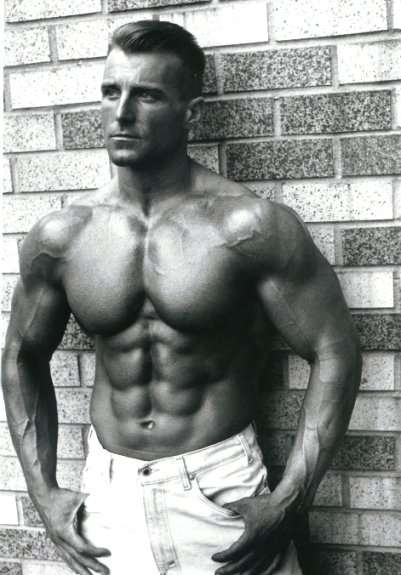
The six pack – a quest to achieve the ultimate look in the mid section. Unfortunately, also probably very very difficult for most of us and probably impossible for some. Truth is that we all have a six pack in there somewhere. And if you incorporate some amount of abdominal exercises into your weekly workout, it’s probably near as good as it gets. However, you can perform zillions of crunches and hanging leg raises and still have nary a one pack. Like most muscle definition, the six pack comes through diet. In order to get that muscle out from hiding, you will have to lose the fat surrounding it. Plain and simple… er… perhaps not so simple. But take it from Tom Venuto, author of “Burn the Fat, Feed the Muscle”. He says,

It takes training to increase strength, build endurance and DEVELOP the abdominals, but to SEE the definition in your abdominals – or any other muscle group for that matter – is almost entirely the result of low body fat levels.

And if you’re concerned about his credibility, just take a gander at the pic above.


Buff up the Backside Like a Celebrity


It just goes to show how good incorporating squats and lunges into your exercise routine can be. Mike Alexander, the personal trainer for Jessica Simpson for her role in Dukes of Hazard, wanted Jessica to get a “lean, toned look” in her Daisy Dukes. Sure it may not have been difficult for someone like Jessica Simpson to look good in short shorts, but what exercises did Mike employ to help shape up her rear? Lower body exercises, like lunges and squats. Brilliant. Gina Lombardi, the host for Discovery channel


No Gym Mini-Workout


No gym? No excuse to not get a little workout in. And by little, I mean fat burning, sweat inducing, heart racing exercising.

Bodyweight exercises are incredibly good. Done at a high intensity, you can push yourself to the limit and experience the full effects for days afterwards.

Perform several exercises in a circuit. That is, do a number of repetitions of one exercise, followed by another and another and repeat with little or no rest in between sets.

I’ve outlined the number of reps that I think would be pretty good, but definitely scale as necessary. If you start feeling light headed or hurt badly, stop. And keep a bottle of water close by – you will need it.