The Obesity Pandemic


Obesity may have been a status symbol at one point in our tiny history.  Having an abundance of midsection was correlated to having wealth and the riches to afford lavishness in the 17th century.  If that were still the case, you’d expect every other person to be in the money these days.  Or at least 40 percent of men and 30 percent of women.

A new global study revealed that 4 in 10 men and 3 in 10 women are overweight, while 24 percent of men and 27 percent of women are obese, researchers reported in Circulation: Journal of the American Heart Association.

The study consisted of looking at over 160,000 people ranging in age from 18 to 80 over 63 countries across five continents.  The results of the study provide a sneak peak at body fat worldwide.  And by sneak peak, I mean showing something that is becoming common knowledge – that obesity is pandemic.  With “one half to two thirds” of the study population being overweight or obese, that is practically an understatement.

Rather than look at BMI (body mass index – a height to weight ratio), the study looked at waist circumference.  According to the lead author of the study, waist circumference is not only easier to measure in a clinical setting, it is also a better indicator of heart disease and diabetes risk.

In the study, 168,159 people (69,409 men, 98,750 women) from 18 to 80 years old (average age 48) in 63 countries across five continents were evaluated by their primary care physicians.

“For men, each increase of approximately 5.5 inches (14 centimeters) means an increased frequency of about 35 percent for heart disease and for women an increase of approximately six inches (15 centimeters) equates to a 40 percent increase for heart disease. Even in people who are lean, an increasing waist circumference means increasing risk for heart disease and diabetes.”

So what has happened to make our World  so obese?  If it is such a health issue and not uncommon sense, then why is it becoming more and more of a problem?  It’s great that we know all the facts but what about a solution?


Reduce Food Cravings by Chewing Gum


gumchewing.jpgSometimes you feel hungry when you don’t really need to eat. Typically in these moments are in between meals and usually less healthy choices are made – we reach for the bag of chips or chocolate bars – yes, the joys of snack time.

But what if there was a simple way to control those cravings. A recent study from Glasgow Caledonian University in Scotland found that chewing gum before snacking could help reduce hunger and promote a sense of fullness. The study showed that the average caloric intake from snacking was reduced by 25 calories among dieters and over 35 calories among non-dieters. Although seemingly insignificant, over the long term these calories add up. The study participants also reported that gum chewing helped improve mood and contentment.

So grab a stick of juicy fruit (sugar free) the taste is gonna move you (less towards the fridge door). I know… terrible joke attempt.


The Parkour of District B13


Here’s a clip of the opening parkour sequence in District B13. The movie is French and stars David Belle (one of the creators of Parkour). As the sequence shows, David has some serious skills. The whole movie is really one stunt sequence after another, full of all sorts of great free running movements.


Thrusters


A great way to do double duty at the gym is to combine a couple of otherwise very different exercises into a single movement. Hanging leg raise to pull-up would be one example of a single gut-busting, lat-straining exercise.

Another really super great combo is the squat to shoulder press movement, otherwise known as a thruster (in crossfit lingo anyway – a key element to the “Fran” benchmark).

The thruster is, as I described, a single movement between squat and press. The exercise can really be done with any sort of weight – kettle bells, barbells, dumbbells, medicine ball – anything you can do a squat and shoulder press with.

Start with the weight positioned at shoulder level as though you are about to do a shoulder press. Instead, go down into a squat, back up and then do the shoulder press. Go immediately back to start – that’s a rep.

Try doing three sets of 8 at an empty bar, 45lbs or 65lbs to start. You may find that you can easily go up to 95 or higher (depending more or less on your shoulder press), but before you do that, attempt to increase the intensity. Whipping off 8 reps of this exercise without pausing between reps will make your heart pound and get your sweat on like you’ve just run a record mile.

P.S. Just don’t overdo it. Exercises like the thruster can really give your body a run for its money.


Track and Field World Records


In the world of sports, few things are as exciting as watching a World record get broken in the track and field events. In preparation for the 2008 Summer Olympics next August, I’ve compiled a bunch of record breaking youtube video clips below.

Unfortunately, not all of the records are on youtube so they weren’t included. Nevertheless, these are all amazing feats of elite specialized athleticism and are very enjoyable.


The Health Lift – AKA Deadlift


The November issue of Mens’ Health just arrived. They have an interesting article called the “5 – Second Strength Booster”. Interesting not because it’s another article about how good the deadlift is but interesting because of the tidbit of information they revealed.

The deadlift was, at some point way back when, called the health lift. Now we typically use barbells or dumbbells, while then the lift simply called for heavy objects. Lift them up, then let them down… done. 5 seconds flat. It was the staple lift – believed to give all the physical exercise that a person needed.

And truthfully, the deadlift (or health lift) is an exercise that, if you could only manage a single exercise for one rep, should be the one. There is no other exercise that engages as many muscles from top to bottom as the deadlift. The bonus is that this great lift requires so little as far as equipment goes. A barbell, dumbbells, a rock, a sandbag, your 27 inch CRT television, the neighbor’s dog – whatever.

Of course, like most exercises – technique is key. Many people actually avoid the deadlift because of the rumor that it could seriously hurt your back. Done incorrectly, this is true. Done correctly, however, the deadlift not only won’t hurt your back, but will provide you with extra insurance against back problems by strengthening it and the surrounding muscles.

Once again, I have to reference crossfit and their great library of workout demonstrations. The below video gives a great introduction to how the deadlift should be performed. Keep an eye on how the bar literally scales up the legs and thighs. A sign of a good deadlift is some barbell burn on the shins ;)


YAOSV (yet another overhead squat video)


Despite my shins still suffering from last Sunday’s race, I did some overhead squats tonight. I did the usual 135lbs for a whole whack of reps.

I did a quick “overhead squat” search on Google and found this vid. The guy starts off light (relatively anyway, at 135#), then after a few missed attempts at 225#, he scales back and nails a 205 pounder.

But check out his form. It’s good stuff. He nails his balance and is able to go down past the parallel to floor position.

Overhead squats are great, but difficult. Test it out sometime if you’ve never done them before. Use an empty bar or even a broomstick before you add the weight. Even then, go light. This is one exercise where form is key.


What is DOMS?


DOMS stands for Delayed Onset Muscle Soreness. It’s the muscle pain you feel after an exercise, which generally gets worse as the next day or so progress. Within several days, the pain will usually subside. But what, exactly, is the cause of the pain?

A buildup of lactic acid will cause burning sensations around heavily worked muscles, but lactic acid disperses fairly quickly and so cannot be accounted for a delayed soreness. Instead, it is thought that the cause of DOMS is muscle damage caused by eccentric or lengthening muscle contractions, specifically during new training programs or exercises which you are unaccustomed to. It’s why you may never hurt much after the gym but after a few games of beach volleyball, you can barely walk for days afterwards.

The reason why the pain gets worse as time progresses, although still debated, is likely due to inflammation and the muscle tissue repair process that starts occurring after the damage.


Taking the Soreness out of Muscle and Joint Sorenesss


Running, lifting, biking…  Three great ways to get in a workout.  Three great ways to give yourself some muscle or joint soreness.

Yesterday I did the Oktoberfest 5k race in Waterloo.  It was lots of fun and I posted a new personal best for the 5k.  This personal best turned into an inability to walk without wincing in pain for the next 30+ hours.

So what do you do when you’re feeling sore from working out?  How do you numb the pain?  Unfortunate, short of some serious pain killers, there’s probably no 100% effective method, but fortunately we do have two key items widely available for at least a little bit of relief.

Two words – ice and Advil.

When your muscles are sore, there is likely some swelling going on.  Putting some ice on the affected areas will help decrease the swelling and bring down the pain slightly.  Advil (or Ibuprofen), while great at relieving pain, will also help with the swelling (unlike some other pain medication).

So when the 5k race has got you down a bit, reach in the freezer and then reach in the medicine cabinet.  Taking these steps will not only relieve you of a bit of pain, this will also lead to faster recovery.


Calories and Sugar in Top 20 Popular Drinks


oj.jpgWhen you’re thirsty, what do you grab from the fridge? We all know that water is best as far as calories go. It’s also easy and cheaply available. But unfortunately it is also bland and quite boring. Lately I’ve been kicking it up a notch by including a bottle or two of carbonated water in the fridge. I find it adds a little something extra to the otherwise ho-hum beverage. Sometimes, however, I’ll go for a beer or juice. But how many extra calories would I be consuming by making the alternate decision?

Here’s a top 20 list of some of the most popular drinks and their associated calorie and sugar counts. A couple pints of Guinness and I’d be at my 100% daily caloric intake :)

Item Calories Sugar (g)
Guinness beer (1 pint) 210 17
Coca-Cola Classic (1 can) 140 39
Fruit punch – concentrate (1 glass) 120 27
Apple juice (1 cup) 117 29
Hot chocolate (1 cup) 112 20.8
Orange juice (1 cup) 112 21
Dr. Pepper (1 can) 110 30
Heineken beer (1 bottle) 110 7.5
Bud Light beer (1 bottle) 110 6.6
Milk 1% (1 cup) 102 12.7
Champagne (1 glass) 91 1.2
Tonic water (1 can) 90 23
Coffee – 1 cream, 1 sugar (10 oz) 75 9
Red wine (1 glass) 74 1.8
White wine (1 glass) 70 0.8
Lipton iced tea (1 cup) 70 20
Martini (dry) 62 1.5
Club soda 0 0
Tea – black (1 cup) 0 0
Water (1 cup) 0 0


2007 Toronto Ski and Snowboard Show


Toronto Ski and Snowboard ShowWhile the temperature remains above zero in Southern Ontario for the time being, like every year, before we know it we will be covered in several feet of snow. But it doesn’t mean that all is lost for outdoor sports. That’s right folks, the ski season is right around the corner.

The Toronto Ski and Snowboard Show is being held this weekend at the Exhibition Place. We ventured there today to scope it out (and for me, to purchase a new snowboarding jacket).

Like previous years, there were a load of exhibitors crammed in the building and thousands of people packed in like pickles. This year there seemed to be even more tourism exhibits setup and fewer shops displaying their sale price 2007 merchandise. However, there were still many shopping options available.

Raffles and draws were being held left and right and at 3pm today, several athletes put on a show. A few skiers and snowboarders took to the stage and showed off some serious flip tricks on a monstrous fake ski jump. They were accompanied by a couple of Canadian National championship trampolinists (is that what they’re called?). Bethany Gee and Philip Barbaro showed off some great trampoline skill, both strapped into some skiing equipment and without.

As usual, I found there to be too many people in too little a space with far too much going on. But all was not lost. I came home with a new jacket as planned.

Here’s a very shotty video that I took of the “air show”. I caught the moves on a Motorola v3i phone camera.


To Walk or To Run – Is Moderate Exercising Really Any Good?


To walk or run – a question that many people, getting into exercising ask themselves. Generally, it is well known that any kind of exercise is better than sitting on the couch, playing video games. It’s obvious. But what isn’t so obvious is whether moderate or viorous exercise is better.

In order to attempt to get the public engaged in daily activity, many governments have programs and guidelines. Unfortunately while a bit of government intervention is good, getting the proper advice is often better.

A recent study by Exeter and Brunel universities in Britan found that 56% of men and 71% of women currently believe that moderate activity is best when it comes to staying physicaly healthy. Activities such as walking have become the cup du jour for many Britains. This is likely due to the British government’s promotion of 30 minutes of moderate exercise five times a week which includes activities such as housework and gardening.

Unfortunately, moderate levels of activity only work moderately well. Dr. Gary O’Donovan, the study’s main author says that

“time and time again, the largest and most robust studies have shown that vigorously active individuals live longer and enjoy a better quality of life than moderately active individuals and couch potatoes.”

Brisk walking is definitely a popular activity these days. Whenever driving somewhere in town, I never fail to count at least a couple of people walking, spandex on and water bottles in hand. In fact, I’ve also seen some bodybuilding websites suggest that long bouts of moderately paced walking to be good for muscle building. But to me, this is somewhat counter intuitive.

I’m of the mindset that the more physically or cardiovascularly challenging an exercise, the better it is for you. While I believe that walking is certainly better than nothing, more vigorous activity should definitely also be on the menu. Here are a couple of exercises to add to your workour regime in order to accomodate some more vigor.

  • Join a spinning class. Spinning is similar to stationary cycling but usually done in a class with a high intensity and an instructor taking you through some nice intervals. Many gyms offer spinning classes for no additional cost. The beginner classes are a great way to get a little more sweat on.
  • Running. You may hate running or have trouble doing it, but it’s probably the least expensive, most accomodating method of getting in shape. Even a moderately paced run will increase your heart rate significantly over a brisk walk. Most running stores (the Running Room, for example) will host classes for beginners to advanced runners. If running is something new to you, finding a beginner class is a fantastic way to get into it.
  • Hit the weights. While many people believe that weight training is either not a vigorous method of exercise or that it is strictly for bodybuilders, lifting weights is actually a great workout with the ability to scale intensity to all levels. Working out in a circuit, in fact, may not only be vigorous activity but may also contribute to weight loss and muscle building post-workout, while resting.
  • Body weight exercising is also an inexpensive but versatile method of getting your vigorous exercises in. Again, focus on a circuit style workout consisting of things like air squats, pushups, situps, calf raises, dips or pullups and others and you will find yourself sweating buckets and getting your heart rate up nicely.

But always remember to scale your exercising accordingly. If you’re new to vigorous exercising, maybe talk to your doctor first and possibly start off slowly at either a more moderate pace or with less weight.


The Fit Blog Tip #5


Don’t forget to warm up before your workout. But despite how many people perform their pre-workout warmups, don’t get right into stretching. Starting your workout off with stretches could cause pain and does nothing for flexibility.
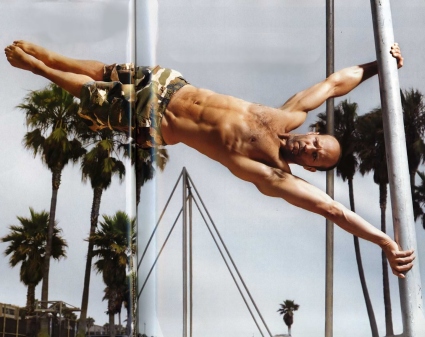
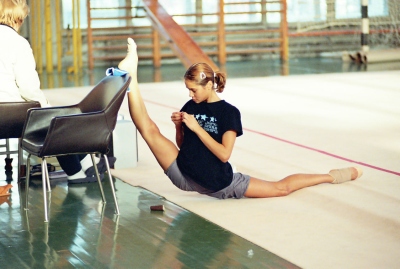
Instead, start off by getting your heart rate up a bit and increasing your body temperature. One great warm up is to perform some air squats and situps. I also find that hitting the rowing machine right away is a great way to start.

Once your quick warm-up is completed, then feel free to get into some stretches.

Remember that it is important to do stretches. Do them… But make sure to stretch only after a real warm-up, half way through your workout or at the end of your workout.  Stretch “warm” rather than “cold”.


Big Marathons are Big Business


This past weekend, Chicago was host to 36,000 runners for the annual Chicago marathon. 36,000 at $90 each is a lot of money. Big marathons are big business these days.

A good article from the Associated Press asks whether these big marathons are losing their charm and are just becoming money making machines. The numbers of people entering the races is growing at a nice steady rate and with the growth comes more cash and credit cards out of hiding.

Sure the money raised by the entrance fee goes towards the race cost and associated charity groups, but think about all the money that the race entrants and families bring with them for outside of the run.

The article discusses how more than half of the runners are from outside of town and as such, tourism takes a huge upswing during the race. From hotels to breakfast buffets, the city is packed like a pickle jar.

The article points out that beyond the money injected into the local economy, “marathoners also tend to have more spending power than average, and so are ideal targets for many companies’ goods and services, hawked at the fitness expos held near the marathon date.” Lots of money exchanges hands and no doubt organizers are looking for additional ways to exploit this for larger revenues.

It’s an interesting article and worth a read, especially as we get on our way into marathon and race season.